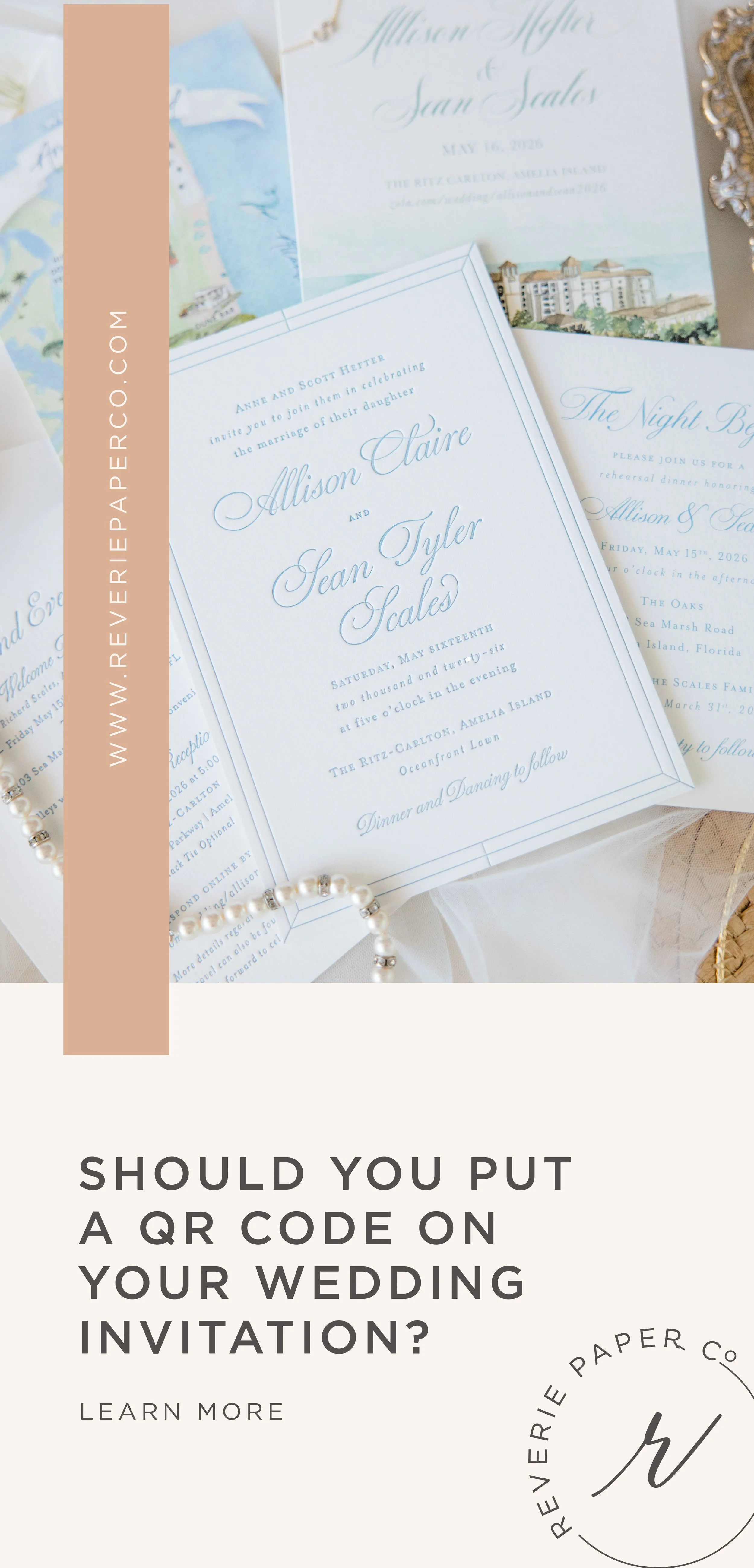
Should You Put a QR Code on Your Wedding Invitation? A Wedding Stationer’s Take
I hate QR codes on wedding invitations.
There, I said it.
And before you come for me: I don’t hate QR codes. I just don’t think your wedding invitation is usually the right place for one.
QR codes are convenient, familiar, and incredibly useful in the right context. But when you’ve invested in beautiful paper, thoughtful typography, custom artwork, letterpress, foil, handmade details, or any of the other elements that make wedding stationery special, adding a black-and-white square to the design can feel a little…anticlimactic.
So, do you need a QR code on your wedding invitation?
Usually, no.
Here’s why—and what I recommend instead.
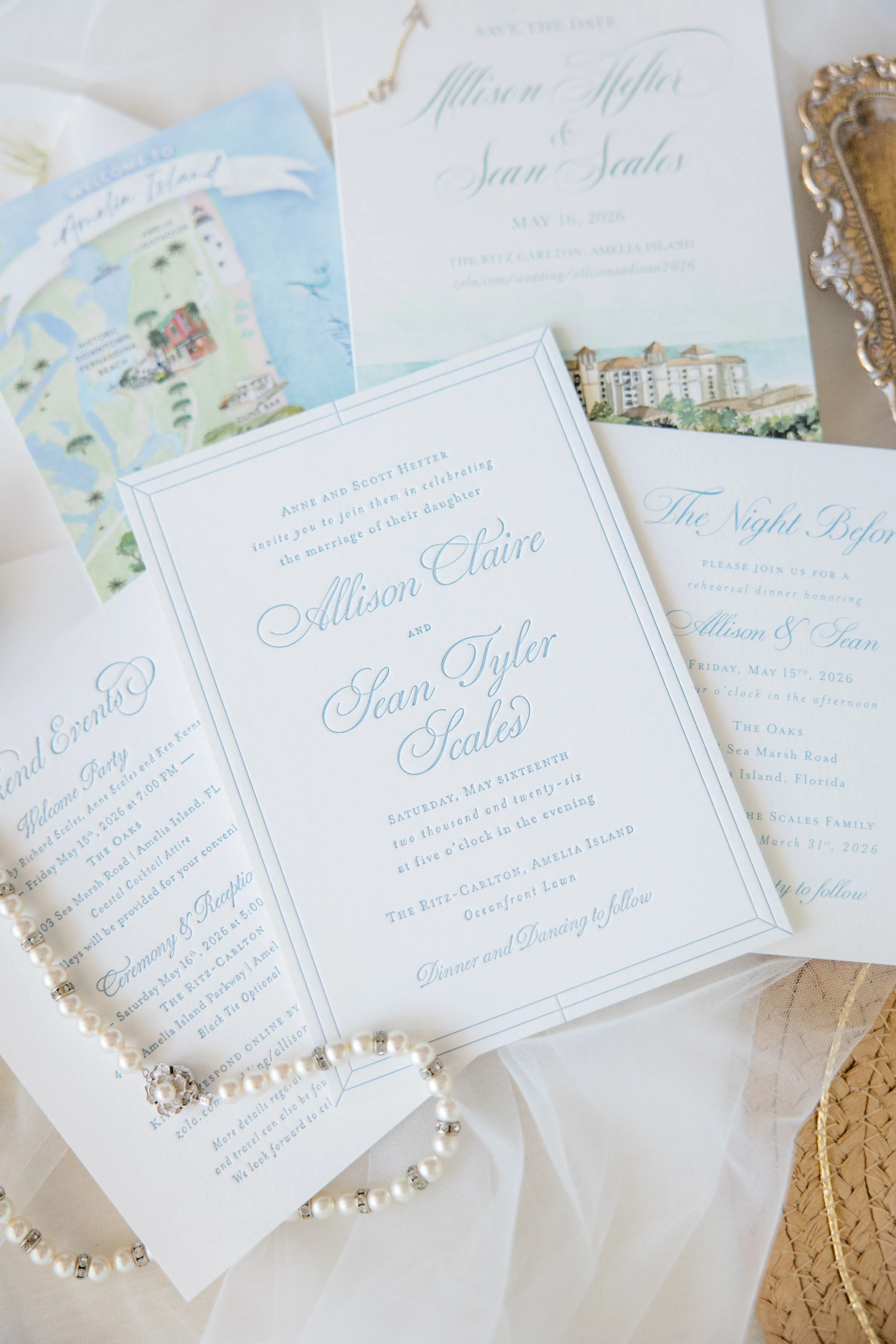
Your Wedding Invitation Should Feel Like a Wedding Invitation
Your wedding invitation is one of the first tangible pieces of your wedding your guests will experience.
Before they see the venue, the flowers, the tablescape, or what you’re wearing, they’ll open that envelope.
Your invitation begins telling the story of what’s to come.
Maybe that means a custom watercolor of your venue. Maybe it’s beautiful typography on handmade paper. Maybe your wedding is colorful and playful, so your stationery is, too.
Whatever direction you choose, every element of your invitation suite should feel intentional.
And then there’s a QR code.
Practical? Absolutely.
A beautiful design element? Not exactly.
QR Codes Can Interrupt the Design
This is probably my biggest issue with putting QR codes directly on wedding invitations.
QR codes need enough size, contrast, and clear space around them to scan reliably. That means they can be difficult to subtly incorporate into a carefully considered stationery design.
When we’re designing an invitation suite, we’re thinking about hierarchy, spacing, typography, artwork, paper, printing methods, and how every individual piece works together.
A QR code tends to demand attention whether we want it to or not.
And if you’ve invested in a beautiful invitation suite, I’d rather not make a a jumble of squares one of its focal points.
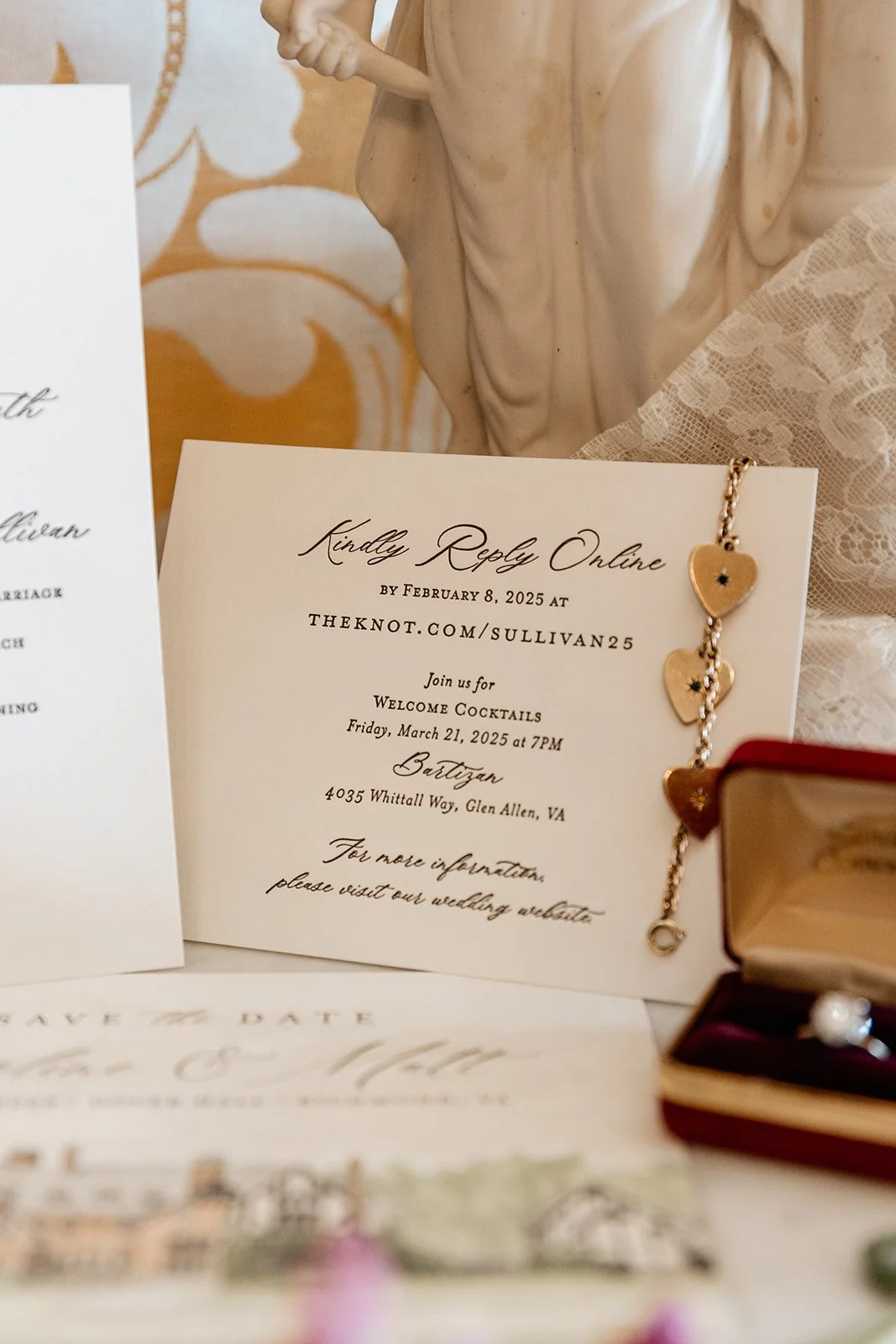
Photo by Barbara O Photography
Your Wedding Website URL Already Does the Job
For most weddings, there’s an incredibly simple alternative:
Print your wedding website URL.
Your details card or RSVP card can simply say something like:
Details & RSVP
yourweddingwebsite.com
That’s it.
HOT TIP: Pay a little extra for a shortened custom url.
Your guests know what a wedding website is. They know how to open a browser and type in a URL.
And from a design perspective, a thoughtfully typeset wedding website address can be incorporated into your stationery much more seamlessly than a QR code.
I promise: your guests can type a URL. I believe in them.
Where Should Your Wedding Website Go?
I generally recommend keeping your wedding website URL off the main invitation itself.
Your invitation should contain the essential information: who is getting married, the wedding date, ceremony time, and location.
Additional information can live on a separate details card.
Depending on your wedding, that card might direct guests to your website for things like:
Online RSVPs
Hotel accommodations
Transportation
Weekend events
Dress code details
This keeps your invitation clean while still making it easy for guests to find everything they need.
What If We're Using Online RSVPs?
You still don't necessarily need a QR code.
If you’re asking guests to RSVP online, your RSVP card can simply direct them to your wedding website.
For example:
Kindly reply by October 10th
at yourweddingwebsite.com
It’s simple, clear, and doesn’t require introducing another visual element into your suite.
And yes, people really will type it in.

Photo by Nikki Santere
But I Don't Hate QR Codes Everywhere
Here’s the important distinction: QR codes can be fantastic on your wedding day.
Once we move away from the invitation suite, there are plenty of situations where convenience becomes more important than maintaining the aesthetic integrity of a small piece of stationery.
Some places I actually love using QR codes include:
The back of table numbers.
Want guests to upload their photos from the evening? This is a great discreet place for a QR code.
Photo-sharing signage.
If you’re using a shared album or photo app, scanning a code makes perfect sense.
Wedding weekend signage.
A QR code can quickly direct guests to schedules, transportation information, maps, or other frequently changing details.
The difference is context.
On these pieces, the QR code is serving a specific functional purpose at the exact moment someone needs it.
So, Should You Put a QR Code on Your Wedding Invitation?
Can you? Of course.
Will I tell you that you’re breaking some sacred rule of wedding etiquette if you do? Absolutely not.
But if you ask for my opinion as a wedding stationer, I’m going to recommend a beautifully typeset wedding website URL instead.
Your invitation suite doesn't need to do everything.
It needs to invite your guests, communicate the essential information, and give them a glimpse of what your wedding will feel like.
Let your wedding website handle the rest.
My Rule for QR Codes and Wedding Stationery
It really comes down to this:
If there’s an elegant analog solution, I’m going to choose it.
Put the URL on your details card. Let your guests type it into their browser. Save the QR codes for places where their convenience genuinely makes the experience better.
Your wedding invitations are allowed to just feel like wedding invitations.
And personally? I think that’s part of what makes receiving one so special.
At Reverie Paper Co., I create thoughtfully designed wedding stationery that balances beauty with function—from Save the Dates and invitation suites to the paper details your guests encounter on the wedding day. Every detail has a job to do; I just don't think a QR code needs to do it on your invitation.